

October 27, 2026
14 min read
Story Guides

30 Comic Ideas for Your Next Comic

Great comic ideas start with a clear central conflict, relatable character flaws, and visual hooks that translate easily into panels. Explore thirty ready-to-use story concepts spanning slice of life, fantasy, sci-fi, and mystery to kickstart your next project.

By Reviewed by Marta KowalHow we review
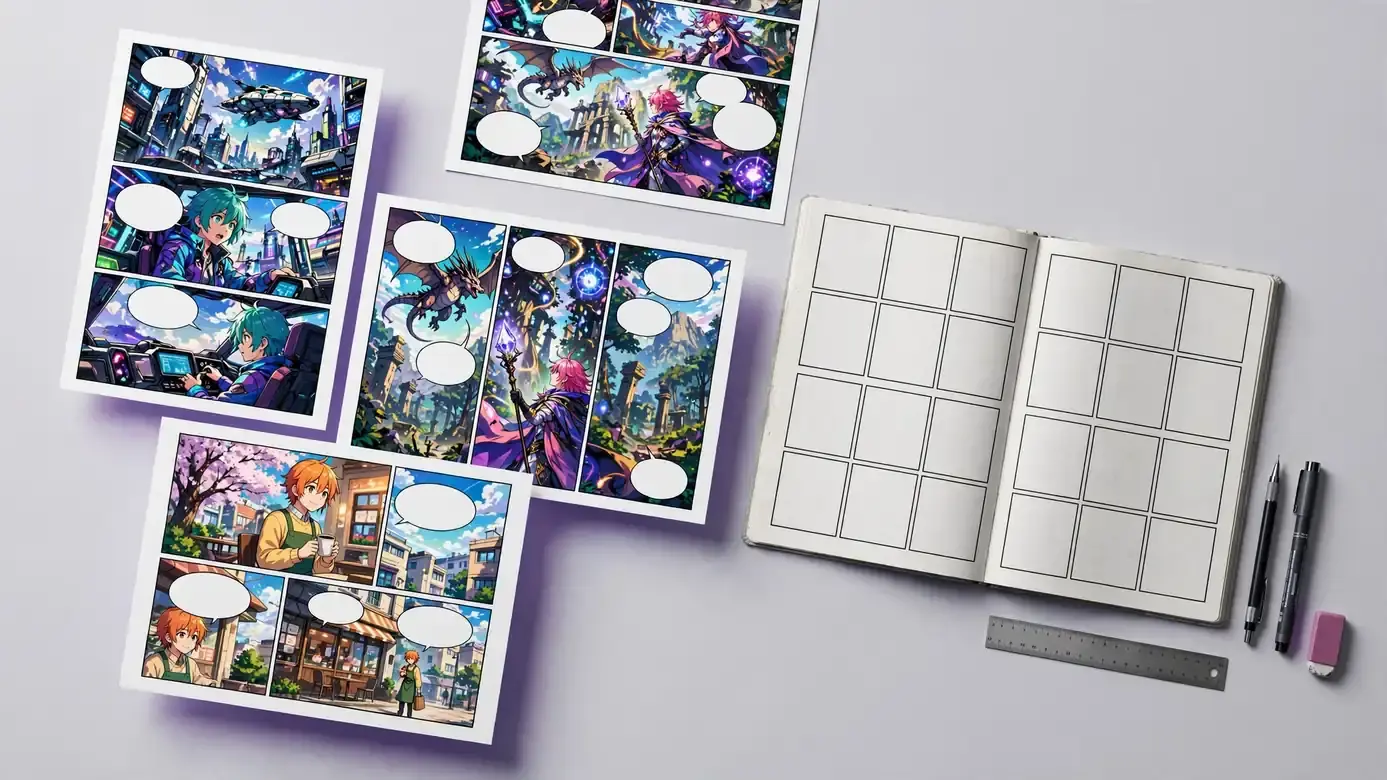
Artist workspace with an open manga sketchbook and digital tablet showing comic panels

Everyday slice-of-life comic ideas to try first

Grounding your story in relatable daily routines gives readers an instant emotional hook before you introduce funny complications. Each one fits a short strip you can build in the comic strip maker.

Four-card grid of anime comic ideas featuring a midnight barista, talking plants, a time loop, and train rivals.

1. The Late Shift Barista

A quiet barista serves eccentric night owls who only visit the cafe between midnight and dawn.

2. The Plant Whisperer Roommate

An apartment renter discovers their roommate has been talking to houseplants, and the plants have started gossiping back.

3. Laundromat Time Loop

A student gets trapped repeating the same thirty-minute wash cycle until they strike up a conversation with a stranger.

4. Commuter Train Rivalry

Two competitive commuters silently race every weekday morning to grab the same single window seat on the subway.

Fantasy comic story ideas with unique magic systems

Developing fantasy comic story ideas becomes much easier when you attach magic to a practical cost or trade craft rather than raw power. If you plan a longer arc, sketch the cast first with these OC ideas.
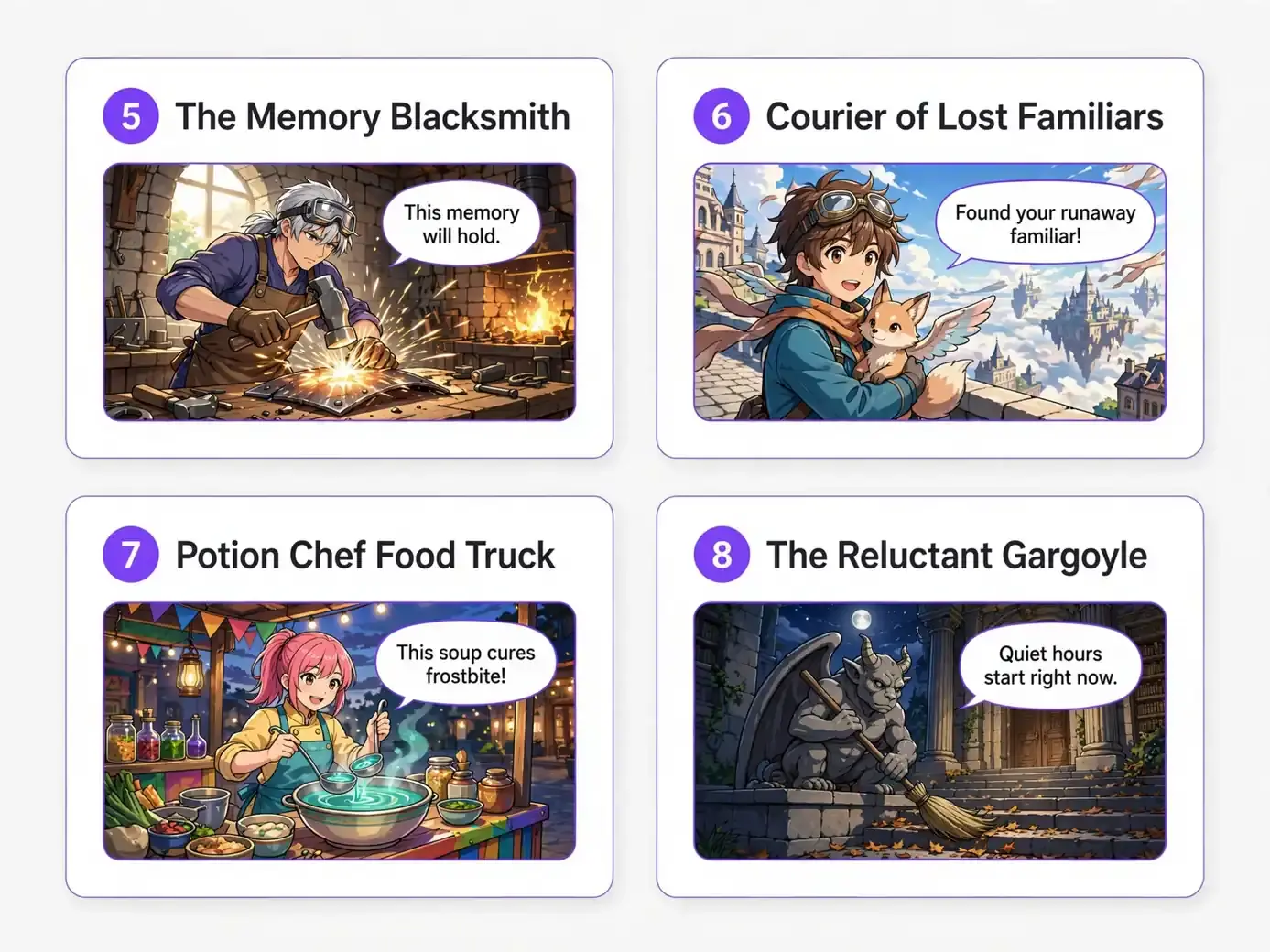
Four anime comic cards featuring a memory blacksmith, familiar courier, potion food truck, and sweeping gargoyle.

5. The Memory Blacksmith

A wandering artisan repairs antique armor by forging the wearer's forgotten childhood memories into enchanted metal plates.

6. Courier of Lost Familiars

A courier runs a delivery service returning stray magical beasts to absent-minded wizard guilds across a floating island city.

7. Potion Chef Food Truck

An apprentice alchemist gets banned from the academy and opens a roadside wagon cooking soups that cure elemental curses.

8. The Reluctant Gargoyle

A stone gargoyle comes alive at sundown only to spend the night sweeping leaves and preventing minor library thefts.

Sci-fi and cyberpunk comic book ideas

These sci-fi comic book ideas explore futuristic settings where ordinary people must navigate strange corporate tech and planetary boundaries. They work well as multi-page stories in the comic book maker.
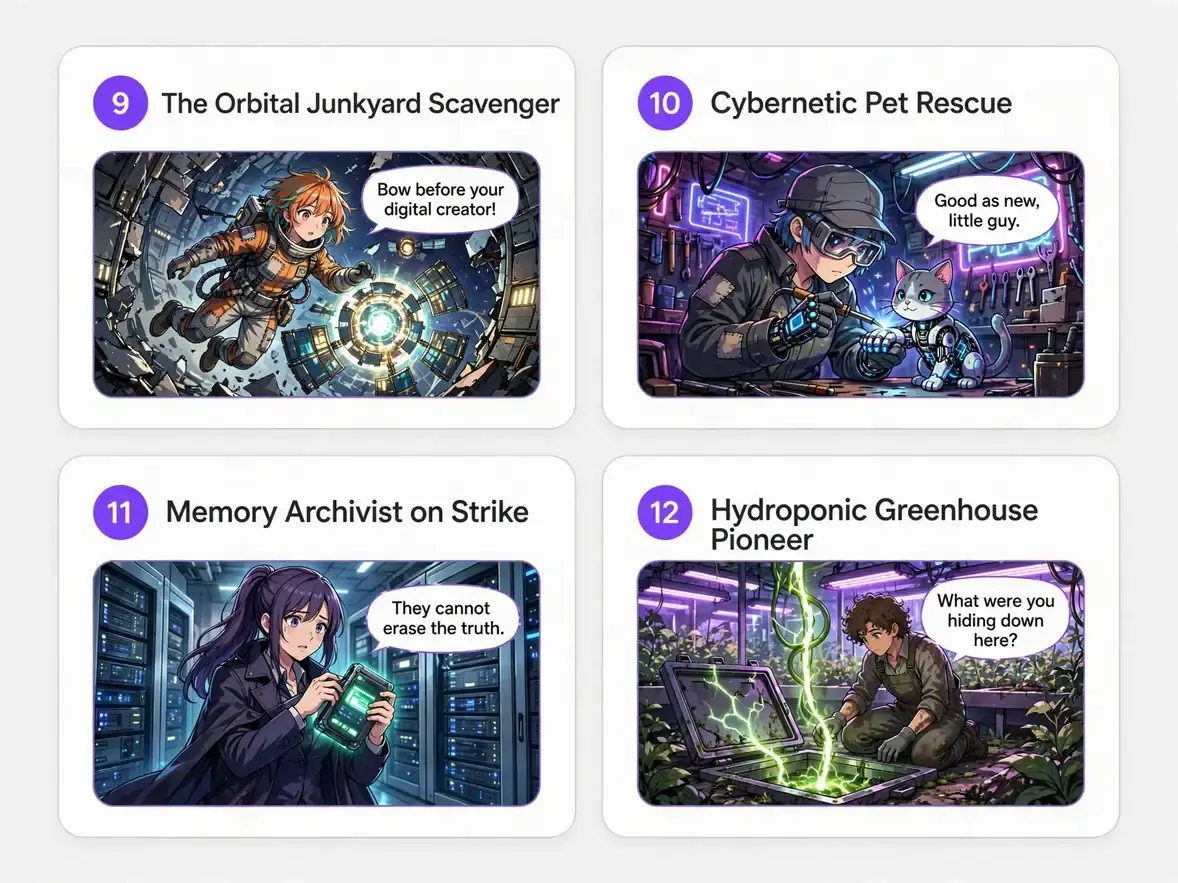
Four anime comic panels featuring a space scavenger, robot pet clinic, corporate archivist, and greenhouse pioneer.

9. The Orbital Junkyard Scavenger

A mechanic salvaging abandoned communication satellites accidentally reboots an obsolete satellite AI that thinks it is a deity.

10. Cybernetic Pet Rescue

A street mechanic runs an underground clinic repairing discarded robotic pets for neighborhood kids in an overcast neon metropolis.

11. Memory Archivist on Strike

A corporate clerk who deletes citizens' traumatic memories decides to leak an illegal backup drive to clear an innocent detective.

12. Hydroponic Greenhouse Pioneer

A lone botanist maintains an underground oxygen farm on a desolate desert planet until a rogue sprout reveals a buried bunker.

Suspenseful mystery and detective premises

Structuring a mystery around a single restricted location keeps panel budgets manageable while escalating tension between your characters.
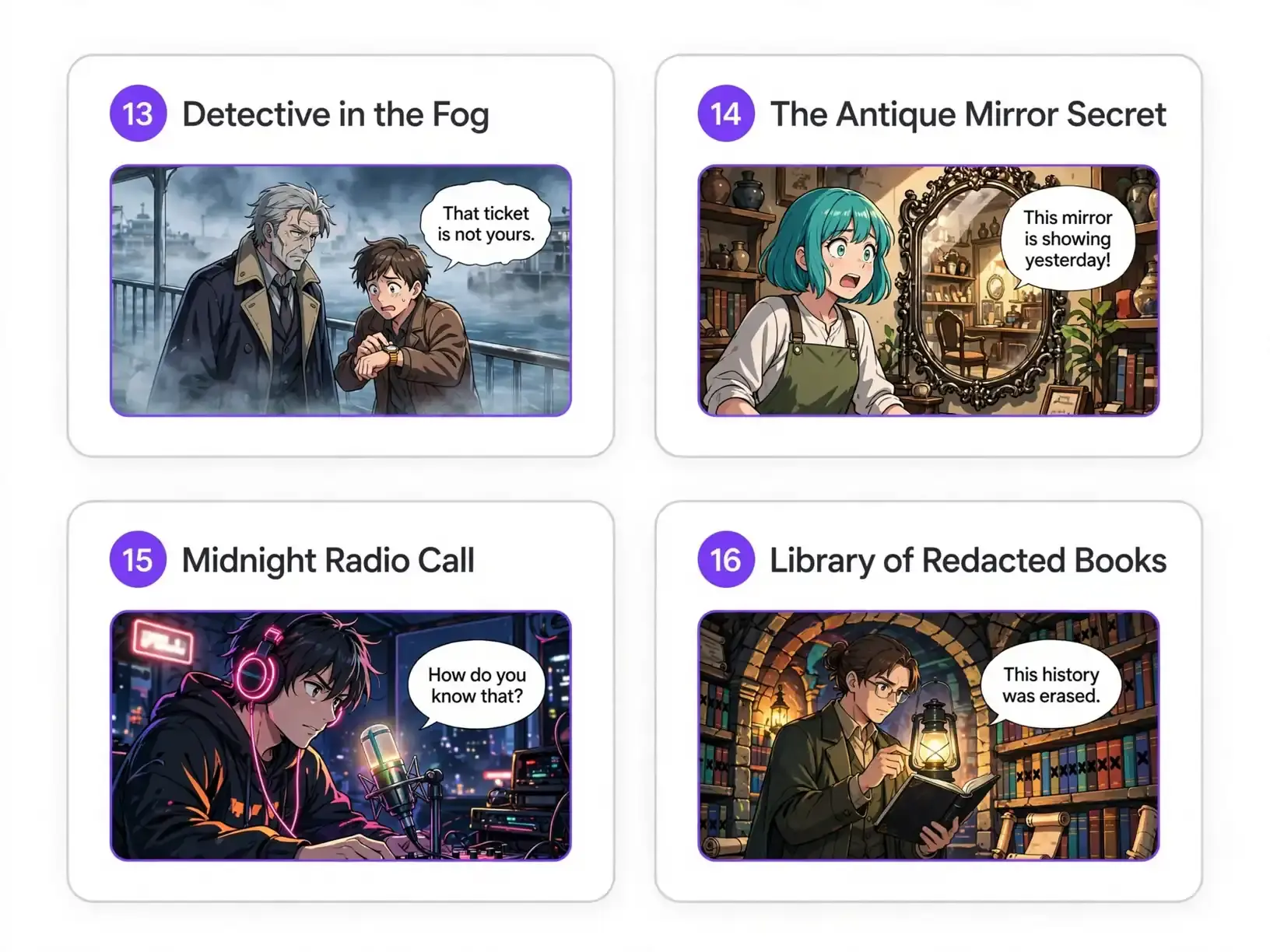
Four colorful anime comic panels illustrating mystery story ideas with expressive characters and speech bubbles.

13. Detective in the Fog

A retired constable on an isolated coastal ferry realizes that one passenger boarded with forged identification and a ticking pocket watch.

14. The Antique Mirror Secret

A vintage shop owner discovers that one ornate Victorian mirror shows what the room looked like exactly twenty-four hours ago.

15. Midnight Radio Call

A late-night radio DJ receives anonymous calls from a listener reporting crimes hours before the police discover any evidence.

16. Library of Redacted Books

An archivist in an underground vault finds a hidden ledger listing historical events that never officially occurred in government records.

What comic should I make for comedy and parody?

When asking yourself what comic should I make for comedy, subverting well-known genre cliches produces immediate visual punchlines.
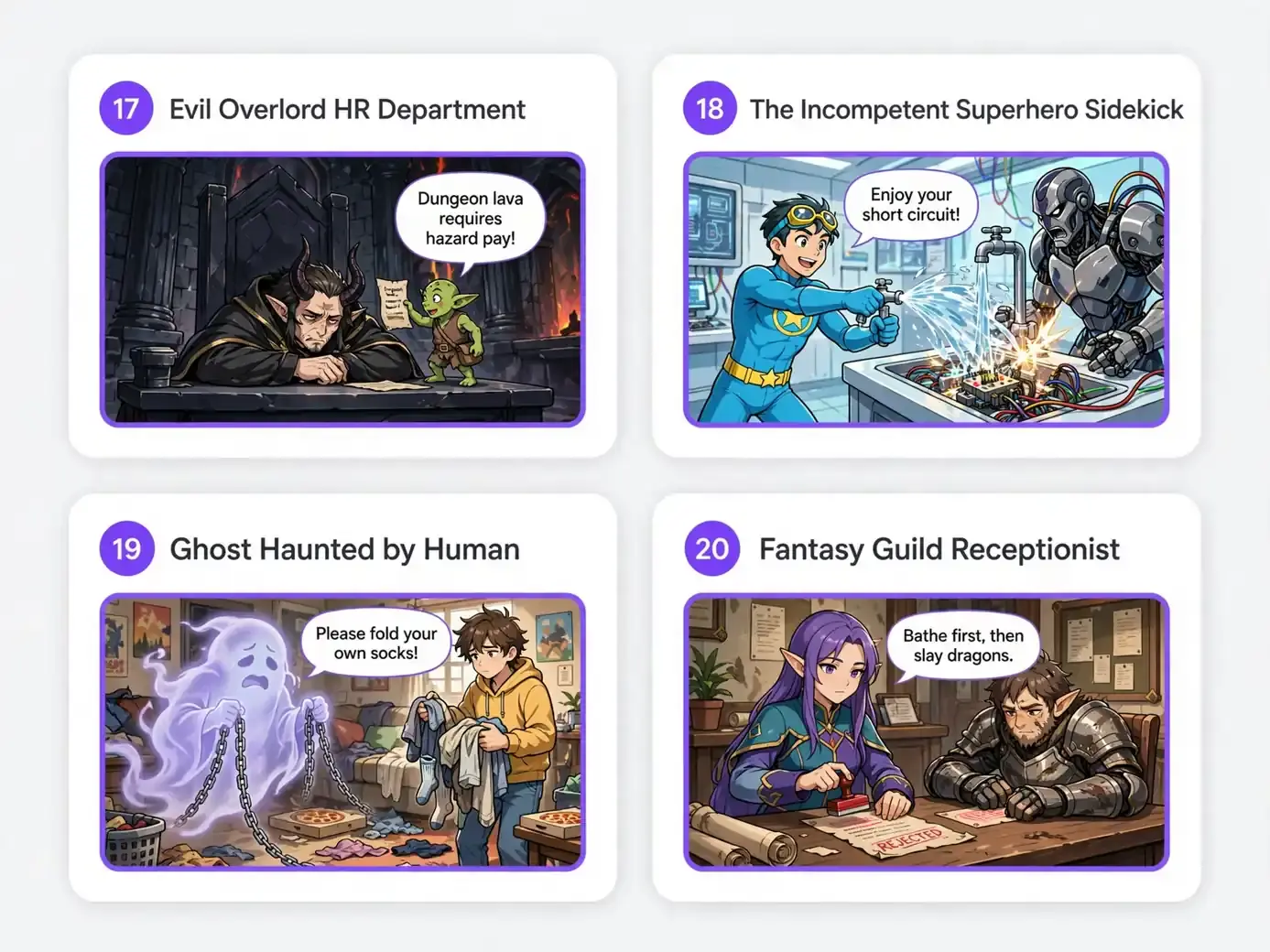
Four colorful anime comic panels showing funny story ideas about overlords, sidekicks, ghosts, and guild clerks.

17. Evil Overlord HR Department

A dark lord must deal with employee unionization, dental claims, and safety complaints from underpaid goblin dungeon minions.

18. The Incompetent Superhero Sidekick

A sidekick with the power to summon lukewarm tap water accidentally saves the city by ruining the villain's electronics.

19. Ghost Haunted by Human

An introverted ghost tries every classic haunting technique to scare away a messy roommate who treats the ghost like an unpaid butler.

20. Fantasy Guild Receptionist

A deadpan guild clerk ranks adventuring parties by hygiene and manners rather than combat skill before granting quest permits.

Supernatural encounters and atmospheric horror

Supernatural horror works best in comics when everyday spaces slowly reveal unsettling details through deliberate panel pacing. For a darker black-and-white look, try them in the manga maker.
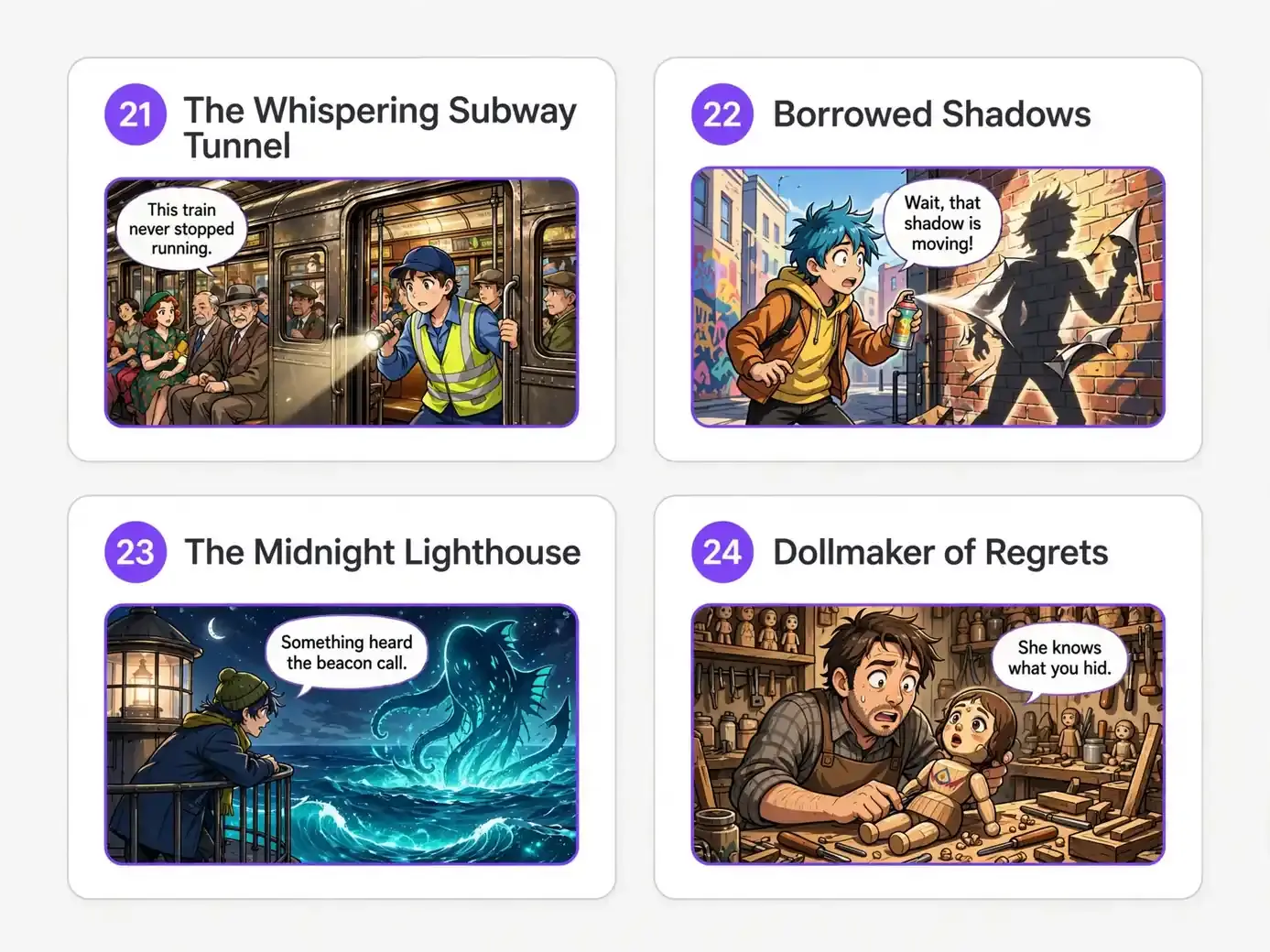
Four anime comic panels showing a ghost train, living shadows, a deep sea titan, and a whispering wooden doll.

21. The Whispering Subway Tunnel

A transit worker inspecting abandoned subway tracks uncovers a sealed platform where trains arrive carrying passengers from another decade.

22. Borrowed Shadows

A street artist discovers their painted shadow figures detach from the brick walls at sunset and copy passersby with sinister intentions.

23. The Midnight Lighthouse

An offshore lighthouse keeper notices the beam is attracting colossal aquatic silhouettes that slowly surface along the reef line.

24. Dollmaker of Regrets

A woodcarver creates wooden dolls that absorb a person's deepest grief, but the dolls begin whispering the secrets to curious neighbors.

Romance and quiet character drama storylines

Relatable emotional stakes and playful misunderstandings give romance stories a natural rhythm that holds attention across multiple pages.
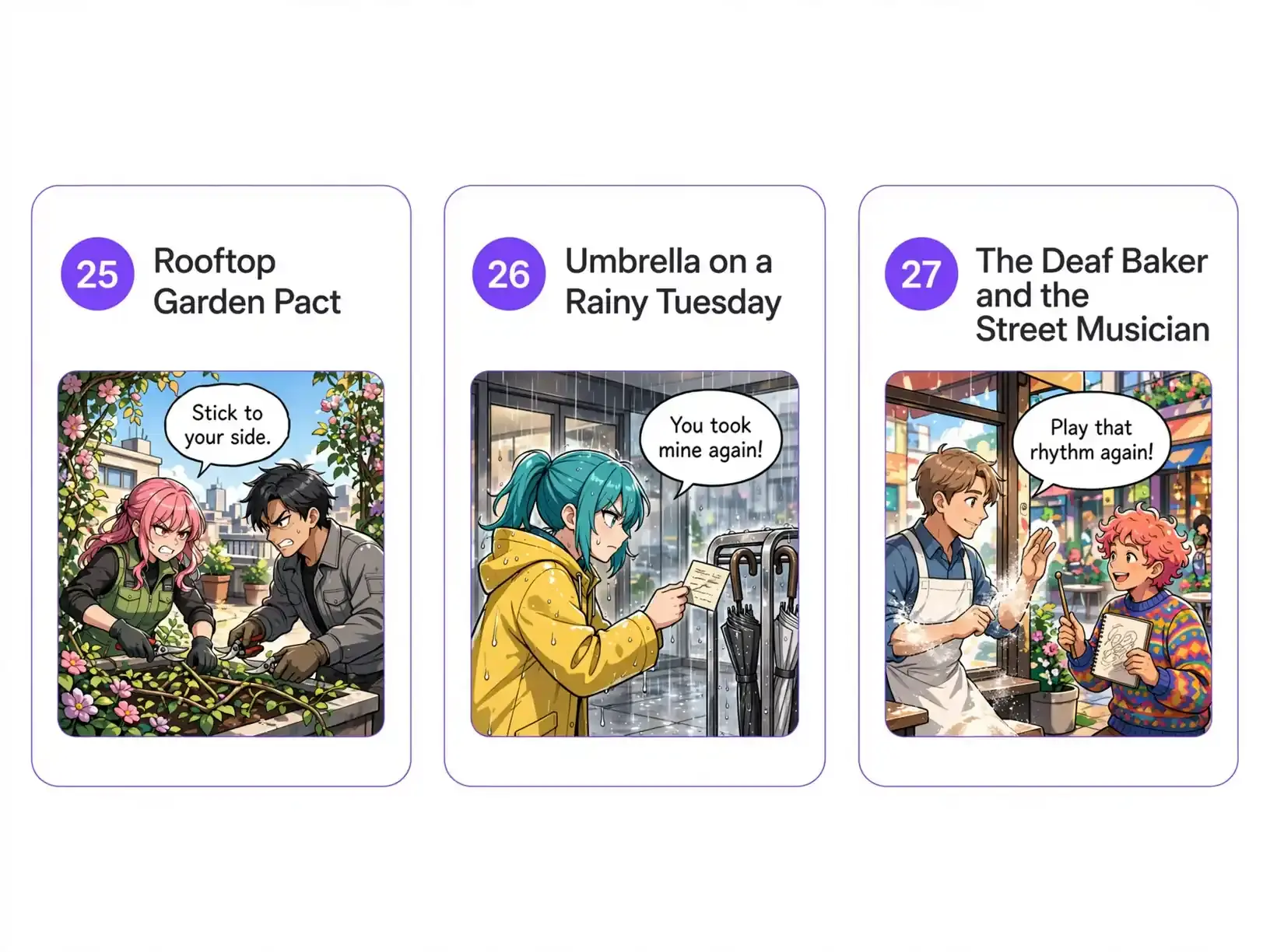
Three anime comic panels showing a rooftop garden rivalry, an umbrella mix-up, and a baker gesturing to a musician.

25. Rooftop Garden Pact

Two rival apartment neighbors agree to cultivate a shared rooftop garden, hiding their secret identities as competing romance novelists.

26. Umbrella on a Rainy Tuesday

Two commuters keep accidentally exchanging identical black umbrellas at the office entrance rack, leaving polite notes in the handles.

27. The Deaf Baker and the Street Musician

A morning baker and an acoustic guitarist outside the shop develop a shared language through sketches and rhythmic kitchen signals.

Surreal comic ideas and experimental stories

Testing out creative ideas for comics with unusual physical rules allows you to experiment with abstract layouts and unique visual metaphors. Paste any of these prompts into the AI comic generator to see the first page.
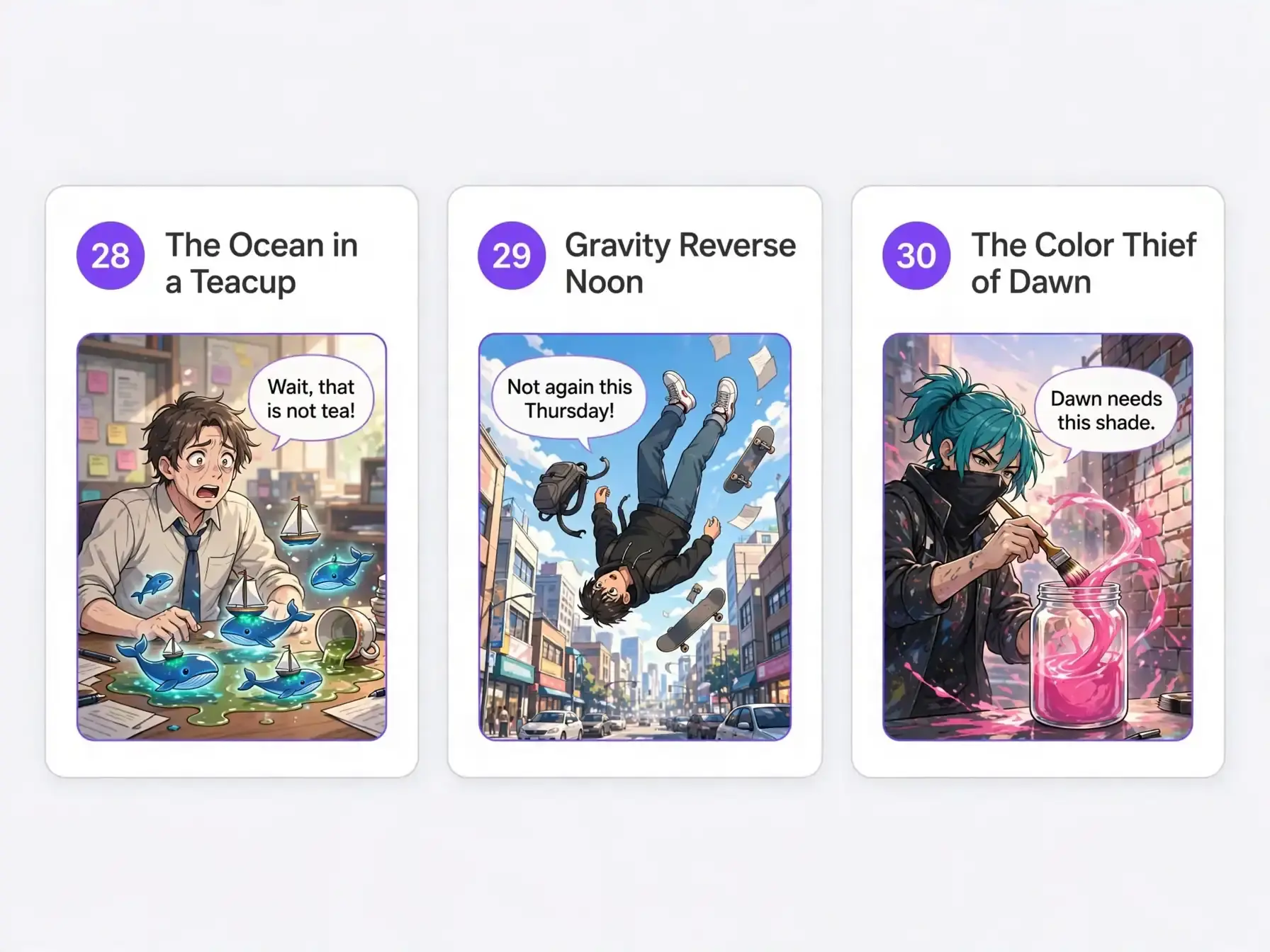
Three anime comic panel cards showing a flooded teacup cubicle, floating pedestrians, and a color-collecting painter.

28. The Ocean in a Teacup

An exhausted office clerk spills a cup of morning green tea and accidentally floods their cubicle with miniature whales and sailboats.

29. Gravity Reverse Noon

For exactly sixty seconds at midday every Thursday, personal gravity reverses for anyone standing on concrete pavement.

30. The Color Thief of Dawn

A mysterious street painter paints over bright neighborhood murals at night, storing vibrant pigments inside glass jars to keep the sky colorful.
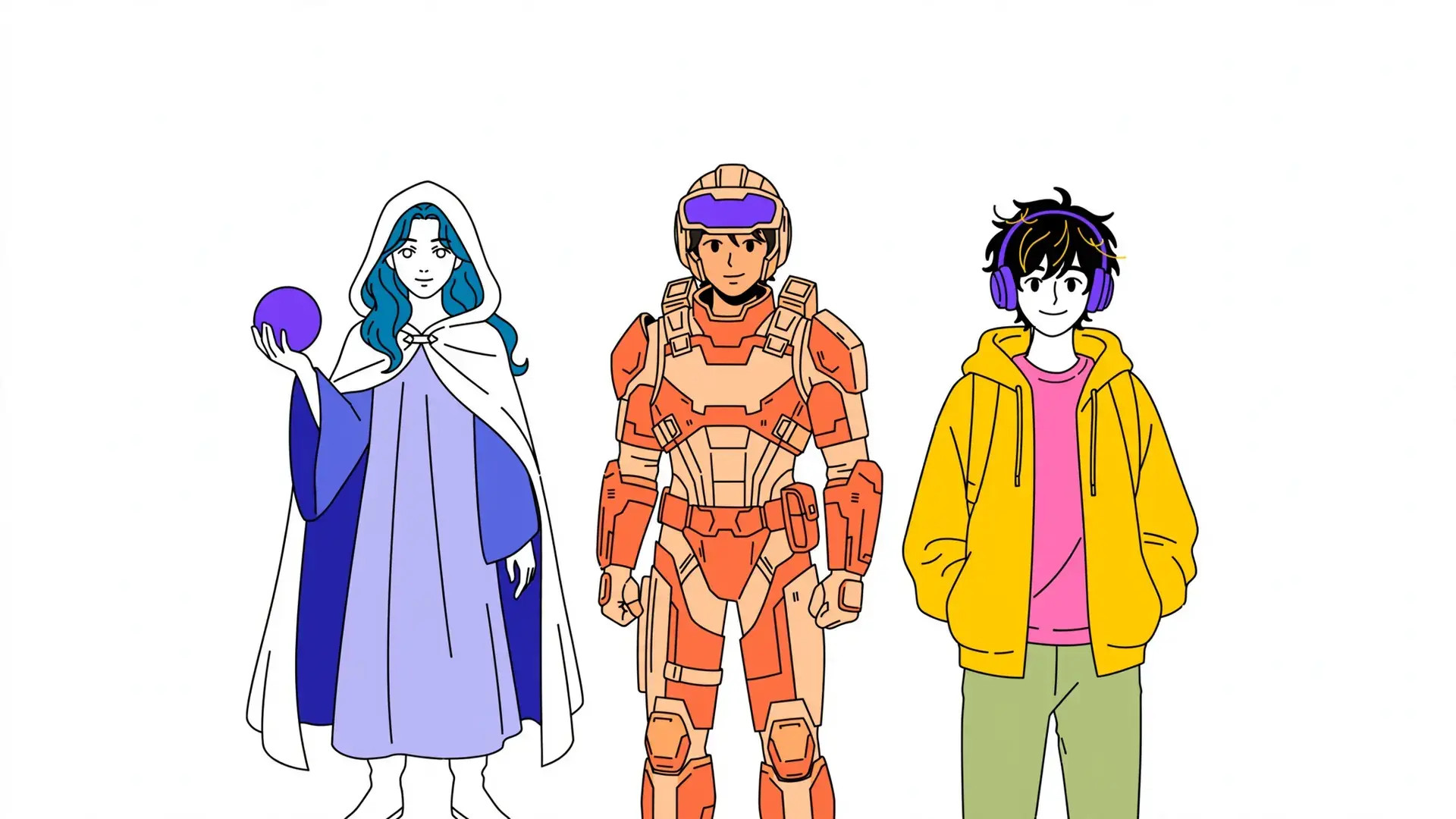
Bringing your comic ideas to life

Strong comic ideas always begin with a simple clash of goals, an unusual habit, or a clear visual constraint. Starting with a focused premise keeps your narrative manageable across pages and panels without overwhelming your storytelling. Pick the concept that sparks your curiosity, outline a few decisive moments, and watch your story take shape.

FAQ

Frequently asked questions about comic ideas

Find direct answers to common questions about brainstorming comic ideas, planning panel layouts, and turning quick premises into finished pages.

What are some simple comic ideas for beginners to start with?

Simple comic ideas often start with mundane everyday misunderstandings, like a pet interpreting household chores as alien invasions or two roommates arguing over who ate the last slice of pizza. You can also build a four-panel gag around an awkward silence during an elevator ride or a failed morning routine. Keeping the scope to one location and two characters lets you finish a page without getting overwhelmed.

How do you brainstorm funny comic ideas that actually make readers laugh?

Funny comic ideas come from sharp contrast, subverted expectations and big facial reactions. Take a dramatic genre cliché, like an evil overlord or a heroic sidekick, and drop it into a mundane situation such as paperwork or a group chat. Testing the gag across three or four panels shows quickly whether the punchline lands.

Where can creators find original comic ideas when facing creative burnout?

Smash two unrelated genres together, like high-stakes tournament drama in a cozy bakery, or borrow the shape of a strange dream or an odd piece of local history. Writing ten one-line premises in a row, then keeping the one you would most like to read, beats waiting for a single perfect idea.

What is the 180 rule in comics, and why does it matter for visual storytelling?

The 180-degree rule keeps two characters on consistent sides of the frame across panels: if one faces right in panel one, they keep facing right while the conversation lasts. Breaking it without a reason makes readers lose track of who is speaking to whom.

How do I turn broad comic book ideas into a structured four-panel script?

To turn broad comic book ideas into finished pages, break the story into setup, escalation, twist, and resolution across your four panels. Panel one introduces the characters and setting, panel two introduces a complication, panel three peaks the tension, and panel four delivers the payoff. You can paste this simple four-part outline directly into an AI comic maker to visualize the flow before refining dialogue.

Can I test my comic ideas on Yume Comic for free?

Yes, Yume Comic is free to start after you sign up, offering a trial to make 1 comic page with up to 4 panels in non-Pro styles. If you want longer stories, Pro plans let you build up to 12 pages per comic with up to 8 panels per page across draft, standard, HD, and ultra quality tiers. Downloads are exported as complete PNG pages without watermarks.

Can I sell or monetize comics created from my story prompts?

Your comics come with a worldwide, non-exclusive license to use, share and publish them for personal and commercial purposes under the YumeComic Terms of Service. You keep ownership of the story text and images you upload; generated outputs are not guaranteed to be unique.

What makes a what-if premise effective for short comic ideas?

A what-if premise works best when it alters a single rule of reality while keeping everything else grounded and relatable. For example, explore what happens if gravity reverses for only one person for five minutes, or if houseplants can verbally complain about being overwatered. Confining an unusual twist to a small scene keeps short comic ideas tightly paced and fun to read.

How do you keep main characters recognizable across multiple comic pages?

Maintaining character recognition requires giving your protagonist two or three high-contrast visual signifiers, such as distinctive hair, colorful goggles, or a signature jacket. In Yume Comic, you can save up to 4 characters per comic using a written description or reference image to preserve consistency across scenes. This prevents characters from shifting facial features or clothing across your pages.

How many words should you write per comic panel speech bubble?

A good rule of thumb is keeping dialogue under 25 words per panel, spread across no more than two speech balloons. Overloading a panel with text covers up the artwork and slows down the visual rhythm of the reader. If a character needs to deliver an extensive speech, split the lines across multiple consecutive panels or summarize the dialogue visually.

How long should your first comic be?

Keep your first comic to one page of three to six panels. A single page is long enough to set up a premise, build it and land a twist, and short enough that you actually finish it.

Should you start with a comic strip or a comic book?

Start with a comic strip. Three or four panels teach you pacing and timing with little risk, and once a few strips work you can grow the strongest idea into a multi-page comic.